
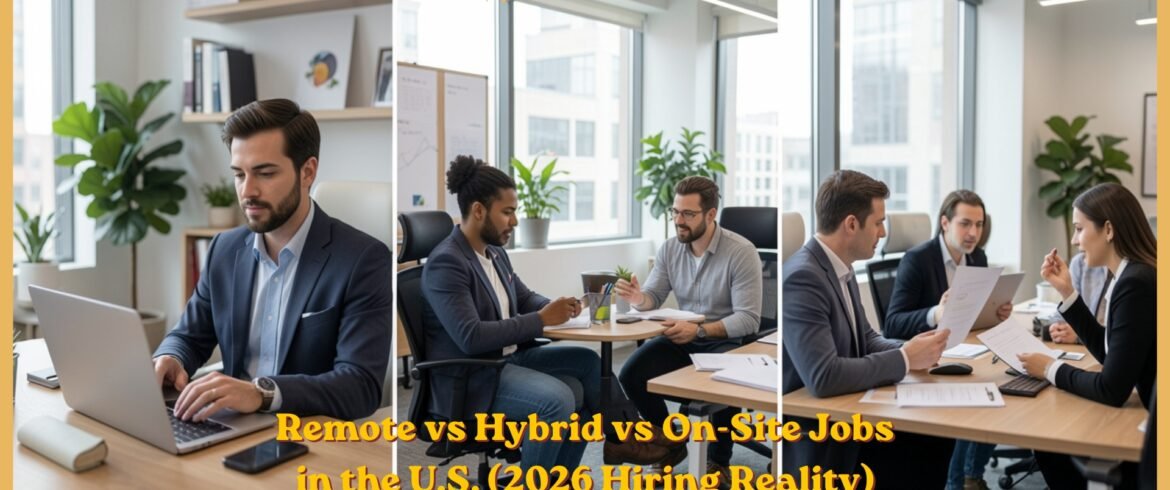
Over the past few years, work culture in the U.S. has undergone a significant transformation. What started as a shift toward remote work has now evolved into a more balanced and strategic approach. In 2026, the conversation is no longer about which work model is better, but about which model aligns with business needs and hiring priorities.
Remote work continues to offer flexibility and access to global opportunities. However, it also comes with increased competition. Since companies can hire from a broader talent pool, candidates applying for remote roles are often evaluated more strictly. Employers expect higher levels of accountability, communication, and self-management from remote employees.
The Truth About Work Models in 2026
Hybrid work has emerged as the most preferred model across industries. It offers a balance between flexibility and collaboration, allowing employees to work remotely while still engaging with teams in person when needed. For many companies, this model provides the best of both worlds; maintaining productivity while fostering team connection and culture.
On-site roles, while less dominant than before, remain relevant in specific sectors. Positions that involve direct collaboration, client interaction, or sensitive data handling often require a physical presence. These roles tend to have more structured expectations and may offer more stability in certain industries.
For candidates, understanding these dynamics is essential. Flexibility is no longer solely a personal preference; it is determined by the role, company, and industry requirements. Applying strategically based on these factors increases the chances of success.
Conclusion
Choosing the right work model is not about preference alone, it’s about alignment with market realities. At NexNovels, candidates are guided to understand where they fit best within these models and how to position themselves accordingly. Because making the right choice at the right time can significantly impact career growth.