
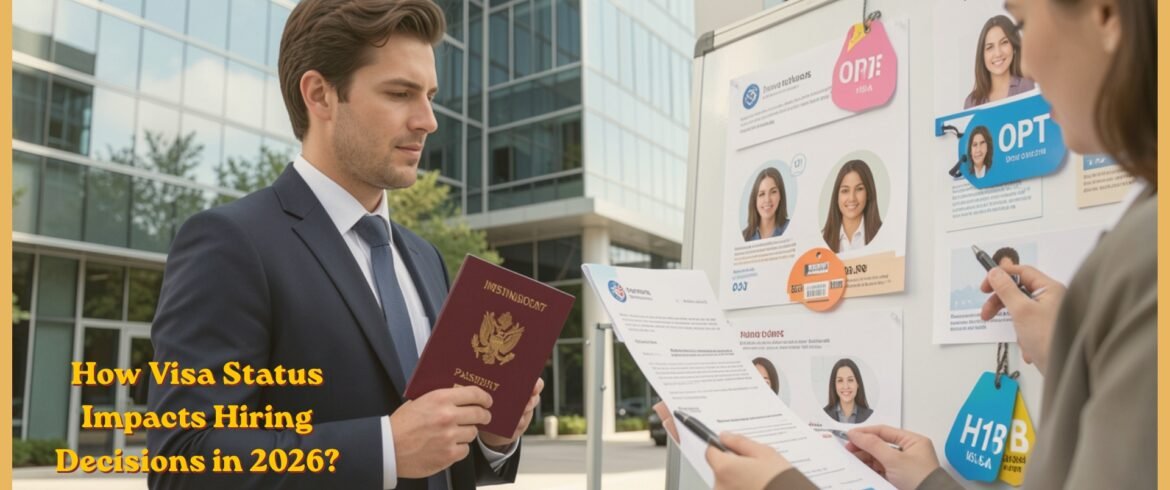
For international candidates, entering the U.S. job market is not just about technical capability or academic background. In 2026, hiring decisions are deeply influenced by timelines, compliance requirements, and the level of confidence an employer has in a candidate’s work authorization. While skills open doors, visa status often determines how wide those doors open, and how quickly.
Employers today operate in a highly structured and risk-aware environment. Before shortlisting candidates, they evaluate how long a candidate can legally work, whether sponsorship will be required, and how complex the hiring process might become. This is why candidates on OPT often have an advantage in entry-level hiring. Their immediate availability and minimal administrative burden make them an easier and faster decision for employers who need talent without delays.
Sponsorship in 2026
However, when it comes to H1B sponsorship, the dynamics shift. Companies are not unwilling to sponsor, but they are far more selective. Sponsorship in 2026 is seen as an investment rather than a routine process. Employers want to be certain that the candidate can contribute meaningful value before committing to long-term sponsorship. This is why candidates who demonstrate strong practical skills, clarity in their role, and the ability to deliver results early are more likely to be considered.
Proactive and Strategic Approach
A common challenge many candidates face is not understanding how to position their visa status effectively. Some delay their job search until timelines become tight, while others fail to communicate their work authorization clearly during applications and interviews. In a fast-moving hiring cycle, lack of clarity can quickly become a reason for rejection.
What works better is a proactive and strategic approach. Candidates who start early, target companies known to hire international talent, and build profiles that clearly justify their value tend to navigate the system more effectively. Timing, preparation, and communication play a crucial role in bridging the gap between opportunity and selection.
Conclusion
Visa status is not a limitation, it is a factor that requires planning and positioning. When approached strategically, it becomes manageable rather than restrictive. At NexNovels, candidates are guided not just on job applications, but on aligning their profiles with hiring realities, including visa considerations. Because in a competitive market, understanding the system is just as important as being part of it.